
Stage#1
Intent Router
Classifies prompts into execution paths such as coding, analysis, and tool-calling workflows.
Evaluate MiniMax M2.5 capability ceilings, review benchmark signals, and map architecture fit for production planning.

Community
Community videos focused on MiniMax M2.5 release notes, benchmark interpretation, and integration planning.
A quick summary of the release announcement and what practitioners should validate first.
Community Creator
Hands-on walkthrough centered on coding behavior, tool use, and response consistency.
Community Creator
Discussion on architecture alignment, deployment tradeoffs, and rollout checklist items.
Community Creator
MiniMax M2.5 is a hybrid reasoning model release from MiniMax, positioned for coding-heavy and long-horizon assistant workflows. It is currently selectable in MiniMax Agent. Teams usually evaluate it through benchmark evidence, architecture fit, and workload testing before rollout.
Balances response quality and execution speed across planning-heavy and direct-answer tasks.
Published benchmark signals help teams define scenario-specific tests before production decisions.
Most teams start from API integration paths and validate quality, latency, and safety step by step.
A practical architecture view for MiniMax M2.5 based on public materials and observed product behavior: intent routing, context assembly, tool interaction, and response safeguards.
Hybrid Reasoning
Reasoning Profile
Tool-aware Flow
Execution Style
Coding + Long Tasks
Evaluation Focus
API-first
Integration Path
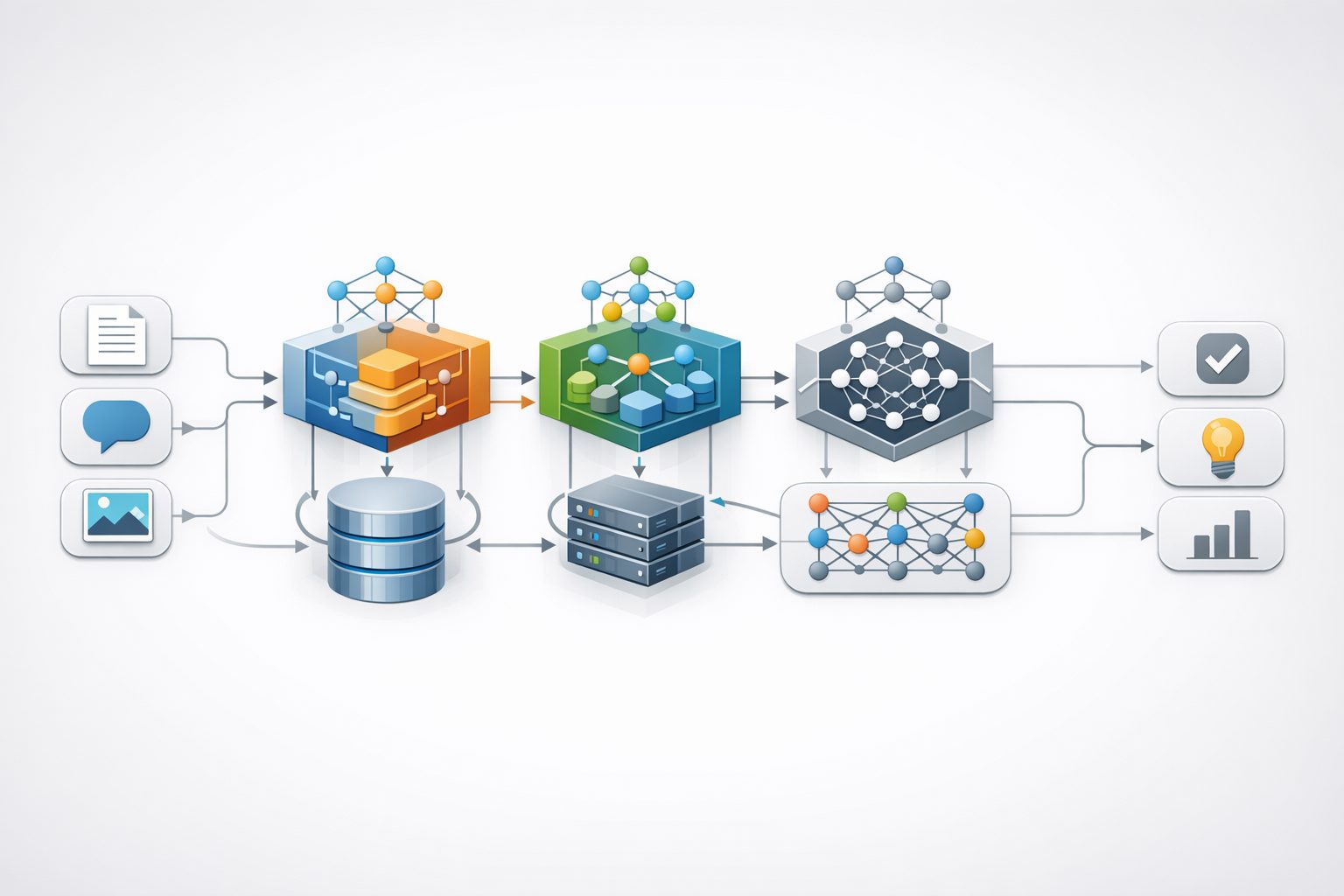
Classifies prompts into execution paths such as coding, analysis, and tool-calling workflows.
Builds working context from user input, recent turns, and retrieved reference materials.
Runs multi-step planning and synthesis to produce structured intermediate outputs.
Invokes external tools and feeds normalized outputs back into the main workflow.
Applies consistency and safety checks before final response delivery.
Supports post-deployment observation loops for quality drift and failure pattern tracking.
Teams use this page to align product, engineering, and evaluation checkpoints before committing migration effort or budget.
Combine release notes, benchmark signals, and community feedback to shortlist candidates quickly.
Use this as a compact decision board before committing engineering and budget resources.
Track M2.5 publication status, source updates, and current product-side availability.
Review published benchmark numbers and convert them into scenario-specific test plans.
Monitor community discussions and video reviews centered on MiniMax M2.5 usage.
Compare routing, context, and tool-use assumptions against your internal stack.
Jump to original links and verify key statements from primary sources.
Define validation gates for quality, reliability, and operational readiness.
Quick answers for common questions when building an unofficial MiniMax M2.5 tracking website.
No. This is an independent, unofficial website built for research and traffic acquisition.
MiniMax M2.5 is publicly released and currently selectable in MiniMax Agent. Historical announcement URLs changed over time, so this site tracks availability through current official surfaces.
This page currently tracks community-cited HLE 56.0 and SWE-bench 65.0 signals, and keeps links to currently available official surfaces.
Validate scenario fit, tool integration behavior, latency and reliability targets, and safety guardrails.
Yes. The section structure is modular, so you can refresh videos, metrics, and source links over time.
The current source set includes MiniMax Agent availability, official model docs, and community context where useful.